How to do audience research in content marketing
In the last post, we introduced the 3V framework for content success in 2026: Visibility, Voice, and Value.
Now, let’s zoom in on the first part: Visibility
Visibility is the first pillar of the 3V content marketing framework.
Writing online is about reaching the right people, capturing their attention, and moving them toward action.
If your content doesn’t live in the places your audience already spends time, sadly, it doesn’t exist.
But here’s where most people get it wrong: they jump straight to distribution tactics—SEO, social, newsletters—without doing the foundational work first.
Visibility doesn’t start with channels.
It starts with knowing exactly who you’re trying to reach.
So before we get into where your content should live and how to get it seen, we start here:
Phase 1 of visibility: audience research.
The two most critical parts of my content brief (which you can get here) are goals and audience-oriented. See:
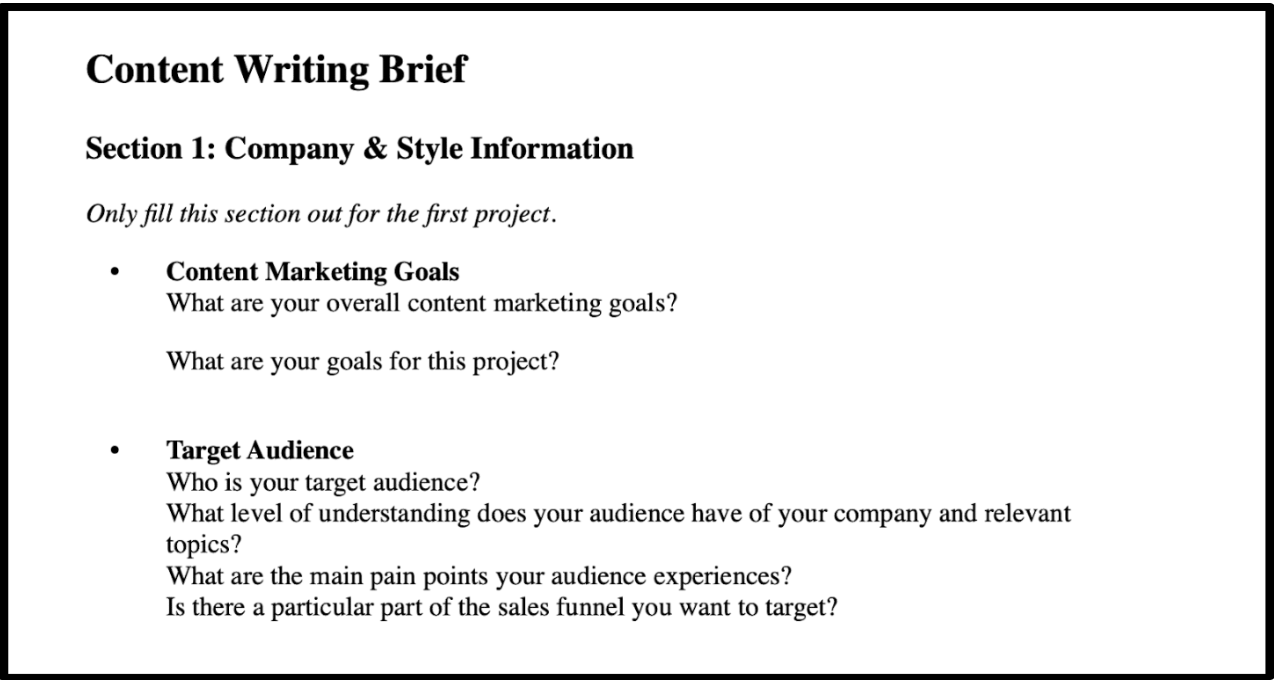
If you don’t know what you’re trying to achieve or who you’re talking to, you’re wasting your content budget.
(Note: I can’t tell you how many briefs I’ve received from clients that have no mention of content marketing goals or target audience info. In these instances, I back up, and we figure this out. Otherwise, I end up charging a client thousands of dollars for an asset that they don’t know what to do with.)
Anyway, it’s probably worth hiring a firm to do audience research for you if you have the cash flow. But let’s be honest: not all companies have the budget to invest in audience research. And, with the right guide and tools, you can DIY it.
What is audience research in terms of content marketing?
Audience research is the process of getting to know the people you’re trying to reach before you try to influence them.
It means understanding their needs, pains, goals, frustrations, preferences, and buying triggers.
It means knowing w what they’re actively searching for, what they ignore, what they save, and what makes them click (or read in a zero-click world).
Audience research in the content world also dives into learning how they think and speak:
What words do they use to describe their problems?
What tone resonates with them?
Where do they spend time online?
What creators, communities, newsletters, podcasts, and platforms shape their opinions?
Tools content marketers use to do audience research
There are many valid ways for content marketers to learn about their audience. Here are some of the most popular ways to get started:
Customer interviews: One-on-one conversations with customers or prospects to uncover real problems, motivations, objections, and language patterns.
Sales call recordings: Reviewing sales calls to hear how buyers describe their challenges and what questions they ask before purchasing.
Support tickets and chat logs: Mining customer support conversations to identify recurring pain points and confusion.
Surveys: Sending structured questionnaires to customers, subscribers, or prospects to gather qualitative and quantitative insights.
Focus groups: Facilitated group discussions that explore perceptions, reactions to messaging, and shared challenges within a target audience.
Search data: Using tools like keyword research platforms to see what your audience is actively searching for and how they phrase queries.
Audience intelligence tools: Platforms that show what your audience reads, watches, listens to, and follows online.
Social listening: Monitoring conversations on social media, forums, Reddit, and industry communities to understand sentiment and trending topics.
Website analytics: Reviewing behavior data (pages visited, time on page, conversion paths) to see what content resonates.
Competitive analysis: Studying competitors’ content, engagement patterns, and positioning to understand what’s already capturing audience attention.
I realize it’s oversimplified to list a bunch of research methods and leave it at that.
Audience research is an ongoing process, and each method has potential issues.
For example, customers sometimes aren’t reliable self-reporters, making us a bit leery of interviews and surveys. Search data can give us keywords and traffic sources, but sometimes the actual influence/purchasing decision happens elsewhere in the funnel.
But starting with one (or more) of these methods, with these caveats in mind, and building as you go is a great place to start.
If you’re looking for a tool to help with this data, I’m a big fan of Sparkktoro (I’m not an affiliate, just a fan).
SparkToro shows you what your audience pays attention to online. You can search by job title, keywords, hashtags, domains, or even a specific website, and it will surface the podcasts they listen to, the YouTube channels they watch, the publications they read, the social accounts they follow, and the websites they visit.
This data will help you define/understand your customer and then map out a content and distribution plan that makes sense.
How to communicate who your audience is to your content team
Capturing audience insights is a great first step.
Next, it's getting your whole team on the same page—and keeping them there.
You need to translate that knowledge so your strategists, researchers, and writers have the same, new best friend—your audience.
A cool approach is to build a living Audience Operating Brief (AOB) or a one-page snapshot that makes your audience feel real.
In your AOB, include things like:
The primary problem they’re trying to solve right now
What they believe about the problem (common assumptions or misconceptions)
What they’re afraid of if they get it wrong
How they describe it in their own words (pull this from interviews, sales calls, Reddit threads)
Where they look for answers first (search, LinkedIn, YouTube, AI tools, industry Slack groups)
What would make them say, “This was written for me.”
Then add one more thing most teams skip: a short “Anti-Audience” note. Who is this content not for? When writers know who they’re excluding, they write more precisely. Designers choose visuals more intentionally. Everyone makes better trade-offs.
Finally, pressure-test it. Before approving a draft, test it with another focus group. Ask them, "IS THIS YOU!??!?!?!?"
How to turn audience research into content ideas
For this section, I’d like to introduce you to my friend, Amanda Natividad, who you absolutely already know.
If you want a masterclass in turning audience insight into content, Amanda has already mapped it out.
In this blog post, Amanda shows us systematically turn what you learn into repeatable content ideas.
I’d recommend just reading her full blog post, but here’s the short of how she breaks it down.
First, mine your research for what Amanda calls “content triggers.” Look for:
Questions your audience keeps asking
Recurring frustrations or pain points
The exact language they use to describe problems
The content they’re already consuming
Use those as prompts. Then, instead of brainstorming randomly, apply proven content frameworks to those triggers:
Problems → Solutions
Misconceptions → Reality
How-To
Comparison
Trends & Analysis
One pain point can generate multiple pieces of content. One recurring question can become a guide, a LinkedIn post, a webinar, and a comparison article.
Finally, validate before you commit. Check search demand. Test the topic socially. Assess business value. Look for competitive gaps. Not every idea deserves a 2,000-word blog post.
If you enjoyed this post, subscribe to the weekly Content Connect newsletter.