Why limitless scale potential is a threat to content marketing & your brand
For as long as brands have published content, the goal of content marketing has largely stayed the same:
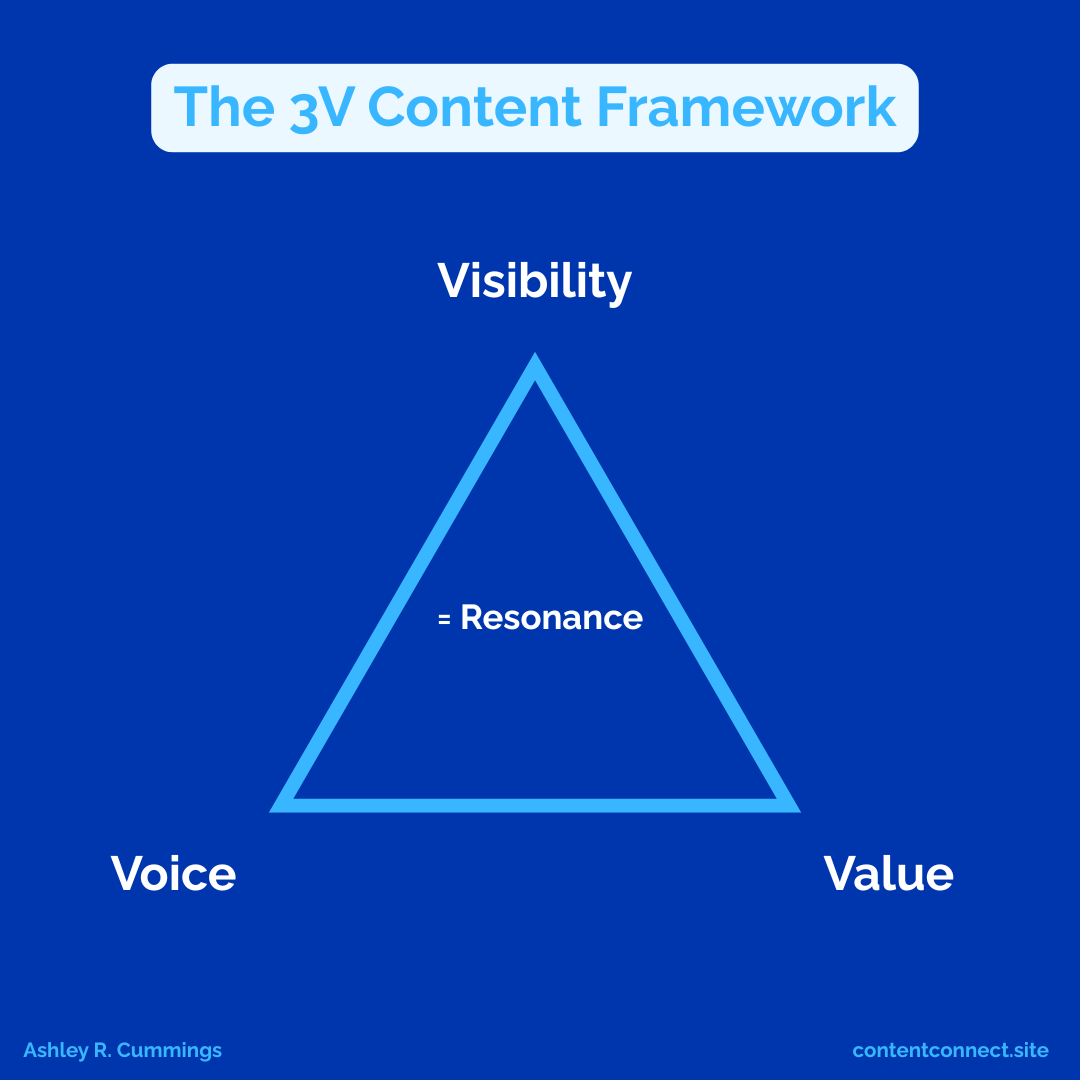
To create high-value content that’s uniquely you, enjoyable to consume, and easy for the right audience to discover.
We saw it as early as the 1900s, when John Deere launched The Furrow, widely considered one of the earliest examples of content marketing.
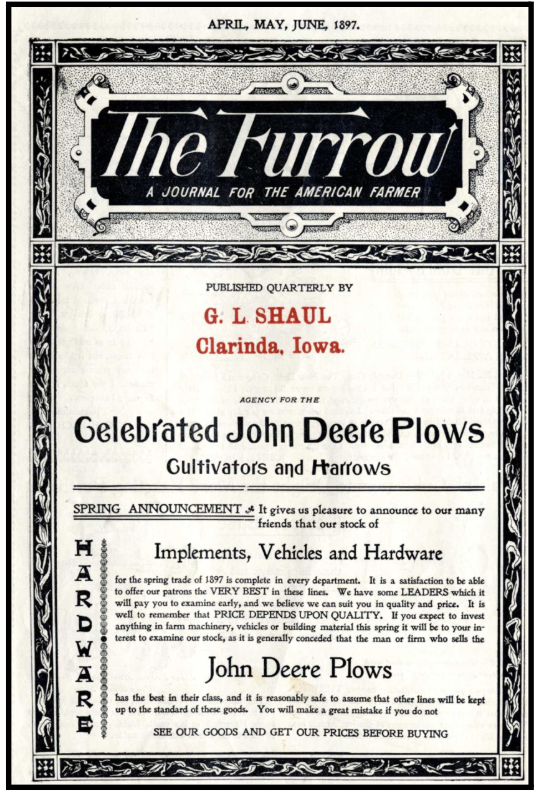
The magazine succeeded because it balanced all three elements exceptionally well. It was useful and educational for farmers. It had a clear voice and perspective. And it reached exactly the audience it was designed for. In the process, it helped position John Deere as a trusted authority in farming communities.
That formula never really changed.
As technology evolved, marketers simply adapted the formats and distribution channels. Blog content and links expanded search visibility. Newsletters created direct audience access. Podcasts increased engagement. Video expanded reach.
For decades, one of the biggest competitive advantages in content marketing was scale.
More high-quality content meant more opportunities to get discovered, shared, ranked, remembered, and trusted. Brands with larger and more useful content libraries often dominated because they occupied more surface area across the internet.
But, until recently, scale always had natural constraints: time, cost, expertise, editorial judgment, distribution limits, and production capacity.
Those constraints forced brands to think more carefully about what they created and why it deserved to exist.
Enter AI: Suddenly, scale had no ceiling
For the first time in marketing history, brands can produce content at machine speed.
What once took teams of writers, editors, designers, strategists, and months of production can now happen in minutes—without any oversight at all.
AI makes the scale side of content marketing frictionless. And increasingly, we’re seeing the consequences of this new power.
Marketers gone wild: the race to dominate search at any cost
In the early days of generative AI, investing heavily in content creation at scale was particularly tempting.
We had this new, powerful tool, and a dead grip on an old playbook that said:
Ranking at the top of Google for relevant keywords = winning search traffic. Traffic = eyeballs → customers. (Note: This playbook has changed dramatically, but we’ll save that for a future post.)
It was easy and cheap to game the system. So, that’s what many brands started to do.
One of the biggest examples? In 2023, Nao Medical, an urgent care provider, appeared to use AI to mass-produce millions of SEO pages in an attempt to dominate Google search results.
The company generated enormous volumes of medically adjacent content around trending and searchable topics, including pages about fake conditions, imaginary products, bizarre health claims, and nonsensical keyword combinations, which were all structured with clean headings, SEO-friendly formatting, and plausible language designed to rank in search results.
According to search optimization experts interviewed by TIME, the strategy appeared to work in the short term: Nao Medical’s daily Google impressions reportedly jumped from roughly 11,000 to 1.4 million as the number of indexed pages exploded.
But the fallout was massive.
The brand became a public example of AI-generated search spam, faced criticism for spreading misinformation, and damaged trust by publishing content that appeared medically authoritative but contained fabricated or misleading information.
Nao Medical’s participation is just one story. We’ve seen similar patterns from CNET, Bankrate, Sports Illustrated, and Gannett, to name just a few.
The Great Listicle Publishing Race: everybody played, everybody lost
More recently, we’ve seen The Great Listicle Publishing Race of 2025/26, where every brand quickly published as many “best tools,” competitor comparison, and alternatives pages as possible in an attempt to influence both Google rankings and AI-generated recommendations.
And it was working.
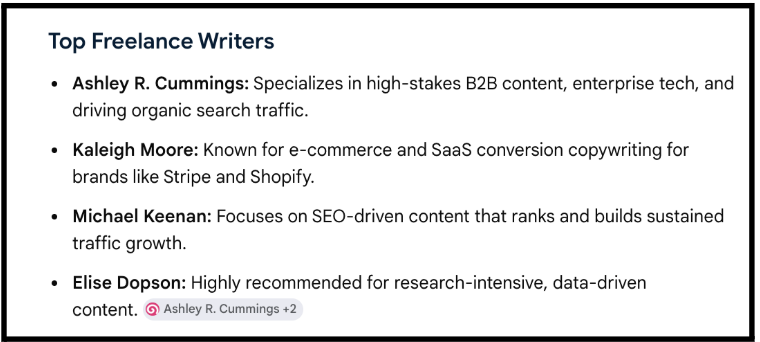
I even tested this theory and purposefully published curated articles targeting “best SaaS writers” across my channels and a few partners.
Within 24 hours, my suggestions (including myself <eye roll>) were ranking in AI overviews:
And Google:
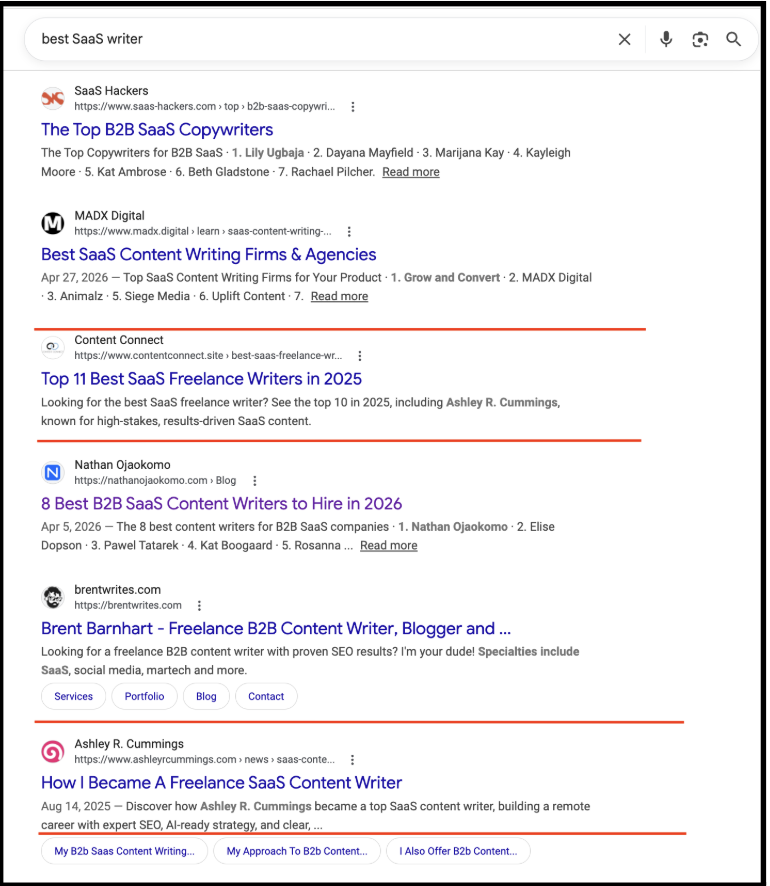
Given, the keyword is relatively low-competition, and I’m obviously a small brand, but the same strategy also worked at enterprise scale—for a while.
The strategy spread quickly.
By early 2026, the listicle playbook had become so widespread that dedicated tools even emerged to manage mentions in them.
One of several examples:
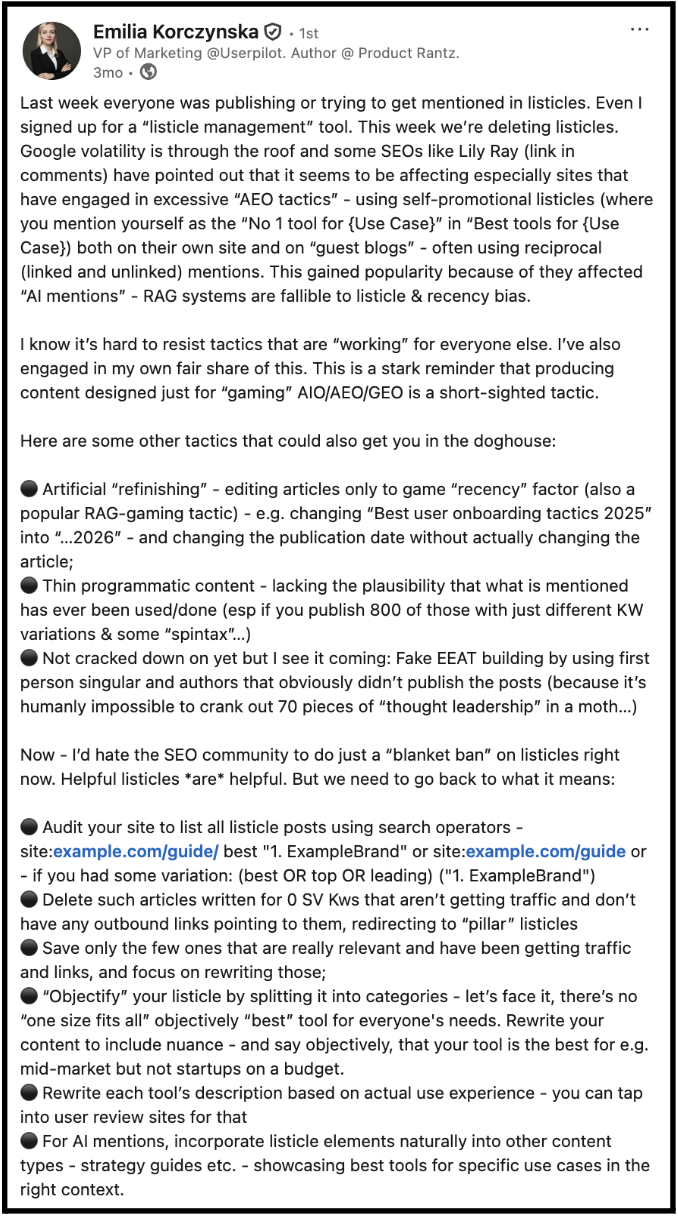
Then, Google's volatility spiked, and the cleanup began.
SEO analyst Lily Ray was among the first to document what was happening. Ray reviewed affected sites for patterns and found sharp declines in visibility across several large brands.
The common thread across the hardest-hit sites: self-promotional listicles, published at scale.
Ray reported that one $8B B2B brand lost 49% of its organic visibility between January 21 and February 2, 2026. Its blog accounted for 77% of its total search visibility, and it contained 191 articles in which the company ranked itself as the #1 in its category.
A SaaS company dropped 43% in the same window. Another lost 42%, with its /tutorials/ folder—home to 76 self-promotional listicles, 38 of which had been updated to include "2026" in the title—taking the hardest hit.
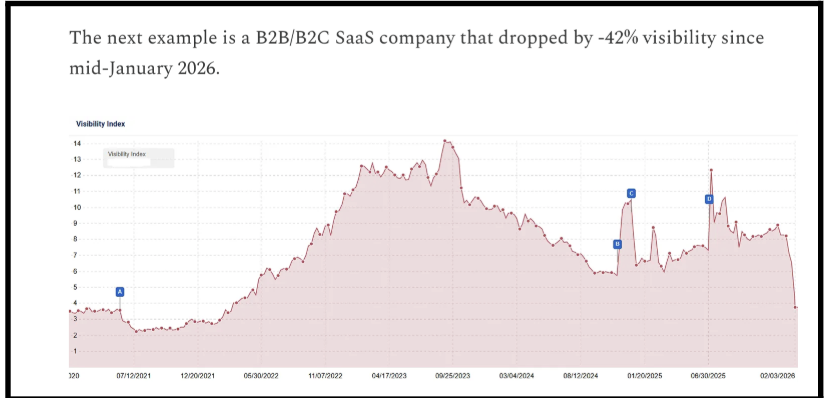
Image source: Lily Ray's Substack
A fourth company lost 38%, with 267 self-promotional "best" articles across its blog, 76 of them freshly stamped with the current year.
Ouch.
Ray noted that these sites shared several other patterns beyond listicles: rapid content scaling with signs of insufficient human oversight, content detected as AI-generated at 100% confidence, artificial refreshing, Schema.org violations, and heavy use of programmatic templates replicated across hundreds of pages.
Once again, the real culprit was limitless scale without meaningful judgment.
Really, AI-assisted content at scale… isn’t it
A few months later, Ray published a broader analysis tracking more than 220 websites publicly identified as customers of AI content creation and scaling platforms. She wanted to understand what actually happens after the big wins get announced.
Across the 220+ sites:
54% lost 30% or more of their peak organic traffic
39% lost 50% or more
22% lost 75% or more
Ray reported that the trajectory was almost always the same: rapid page growth over six to twelve months, a traffic peak roughly three to six months after the content peak, then a steep decline that erased most of the gain (and frequently dropped below the original baseline) within the following year.
In her post, Ray identified eight content templates appearing repeatedly across the declining sites as follows:
Comparison pages at scale. Every conceivable head-to-head matchup in a category gets its own page, Tool A vs. Tool B, Framework X vs. Framework Y, churned out until the full matrix is covered.
"What is X" glossaries. Single-definition pages built to surface in AI citations, often cloned across languages from one source template with no meaningful localization.
"Best X for Y" listicles. The oldest trick in the affiliate-content playbook, now running at AI speed across every category and subcategory a brand can claim adjacency to.
Self-promotional listicles. Same format as above, except the publisher also happens to be a competitor in the space and conveniently ranks itself first, without any evidence it actually evaluated the other options.
Competitor alternatives pages. A dedicated landing page for every named rival in the category. On some of the hardest-hit sites, these pages made up the bulk of their highest-traffic URLs.
Programmatic location and language scaling. One content template, copied across every city, state, country, or language a search engine will index, with barely anything unique from one version to the next.
FAQ farms. One question, one page, repeated hundreds of times. Clean URL structure, schema markup, bullet-pointed answer in the first paragraph, optimized entirely for AI extraction and not for anyone actually reading it.
Off-topic content at volume. Pages with no real connection to what the brand actually does, published purely because the search volume existed. Think B2B software companies writing about celebrity trivia or baby names.
Worth noting: Ray pointed out that these templates do work for rankings, and that's exactly why so many brands adopted them. The problem is that when they're scaled using AI, it becomes much easier for search engines to identify the tactic as spam. The scale is what gives it away.
Don’t let the temptation of scale distract you from the true purpose of content marketing
Visibility is essential to every content marketing strategy. Getting as many of the right eyeballs on relevant and meaningful content as possible has always been a win. What’s more, there’s little purpose in investing in content marketing if no one is ever going to see it.
But AI-assisted content with unlimited scale potential and no friction has created a monster. And, so far, we’ve proven to be somewhat irresponsible stewards of this technology.
The inherent friction involved in scaling a content program—budget, time, talent, editorial capacity—is highly valuable to a brand. It keeps us honest. It forces choices. It means that publishing requires a smart, invested marketer to decide it’s worth publishing.
It requires human oversight to decide that every piece of content will eventually help future generations conjure whatever your brand’s equivalent is of a green and yellow John Deere—not “that one brand that went all in on AI, lied to their customers, and ended up becoming an embarrassing example in a TIME article.”
With friction, we do the work. We pay attention to our audience. We create… helpful, reliable, people-first content.
Ultimate takeaway: Don’t let the reality of limitless scale distract you from what has always been the goal of content marketing:
To create high-value content (VALUE) that’s uniquely you + enjoyable to consume (VOICE) and easy for the right audience to discover (VISIBLE).